Every October, the construction industry celebrates Careers in Construction Month. It is a good time to ask an honest question: Is a four-year degree still the best path for everyone?
When exploring career choices, there are many things to consider. Some high school students know exactly what they want to be. Some don’t. Others are curious, looking at opportunities and the average income of different jobs. The next big question is whether to go to college, enter the workforce, join the military, or attend a trade school.
For many high school seniors, going to college feels like the only option. But what about the students who don’t want to sit in a classroom for 4 more years, or who learn better with hands-on training? What about the student who wants to start earning real income right away?
The old stereotype said trade school was the lesser path. The 2026 numbers tell a different story.
The demand is real
Associated Builders and Contractors estimates the construction industry needs 349,000 net new workers in 2026, and will rise to 456,000 in 2027. In the 2026 AGC and NCCER workforce survey, 87 percent of construction firms reported openings for hourly craft positions, and 42 percent said worker shortages have delayed their projects. The Bureau of Labor Statistics counted more than 300,000 construction job openings in the middle of 2026. This is not a future problem. It is right now.
The pay is real too

Bureau of Labor Statistics data puts median pay for electricians at about $61,590 and plumbers at about $61,550, compared with an average starting salary of $59,384 for bachelor’s degree holders. Nearly half of skilled trades workers now earn more than the median college graduate. And the ceiling keeps climbing: experienced superintendents, estimators, and project managers in construction routinely earn $120,000 to $180,000.
Then there is the debt side of the equation
Total student loan debt in the U.S. sits near $1.84 trillion, with the average federal borrower carrying close to $39,000. Average published tuition runs about $11,950 a year at public four-year schools and about $45,000 at private ones. A 2026 industry study found that trade workers reach their financial break-even point at age 19, compared with age 26 for bachelor’s degree holders, and nearly three in four tradespeople graduate debt-free.
The trades hold up against AI, too
In that same study, 83% of tradespeople said AI can’t replace their jobs. You cannot automate a ladder, a trowel, or a service call.
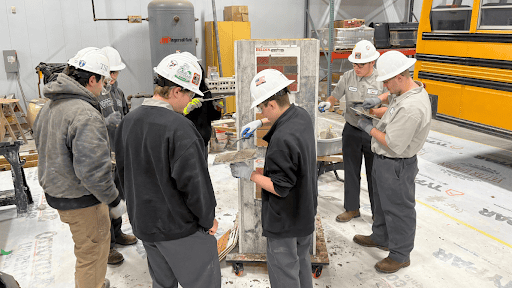
When you attend a trade school, you are doing the same thing as students who take the traditional route: preparing yourself for a career and learning the tools to earn an income. You just do it in a different environment, and often you get paid while you learn. You also get the chance to network, prove yourself, and build relationships that matter. Ninety-four percent of tradespeople say they are satisfied with their work.

If you are considering the trades, or if you are unsure what you want to do, give us a call. We would love to tell you more about the benefits of joining the skilled workforce.
419.339.3906
Office@TriscoSystems.com
2000 Baty Rd., Lima, OH 45807